
Buy Now Pay Later (BNPL) in India (2026): How It Works, Fees, Risks & Alternatives | PuneInvest
Last verified: 1 September 2026 — Fee ranges and RBI stance checked against RBI Master Directions on PPI / Credit Cards and BNPL providers’ MITCs. BNPL interest varies by merchant subvention — 0% EMI often hides merchant discount. Guide by Rajendra Todkar, PuneInvest.
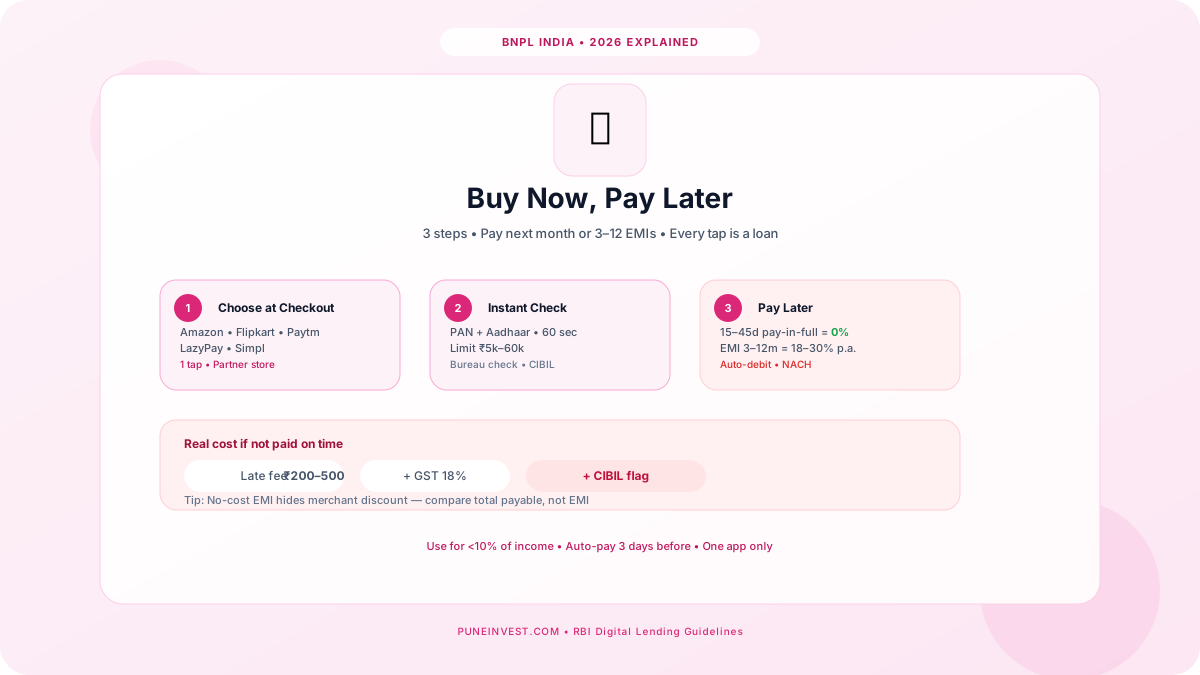
Buy Now, Pay Later (BNPL) lets you shop now and pay in slices — either a 15–45-day interest-free pay-in-full or 3–12 month EMIs. It feels lighter than a credit card, but every BNPL is still a loan reported to CIBIL.
How BNPL Works — 3 Steps
- Choose BNPL at checkout (online or offline partner store) — Amazon Pay Later, Flipkart Pay Later, Paytm Postpaid, LazyPay, Simpl, Mobikwik ZIP, ICICI PayLater, etc.
- Instant credit check — PAN + Aadhaar, 60-second bureau check via the app. You get a credit limit of Rs 5,000–60,000 (repeat users higher). No form if you are pre-approved.
- Pay later — two options:
- Pay in full in the next billing cycle (often 15–45 days) — no interest if on time.
- Convert to EMI — 3, 6, 9 or 12 installments. Interest may be “no-cost EMI” (merchant pays discount) or 18–30% p.a. billed to you when no offer exists.
Repayment is auto-debited (NACH/e-mandate) from your bank. Miss the auto-debit and you pay late fees plus bureau reporting.
Real Cost Structure (Read Before You Tap)
| Cost head | Typical India 2026 range |
|---|---|
| Interest on EMI (if not no-cost) | 18–30% p.a. (2–2.5% per month), 24–48% on some wallets |
| Processing / convenience fee | Rs 0–199 per transaction or 1–2% of EMI amount |
| Late payment fee | Rs 200–500 per instance + penal interest 2–3% per month on overdue |
| GST | 18% on all fees and interest |
| Overdue reporting | Every lender reports to CIBIL/Experian — 30+ days overdue = score dip of 50–80 points |
“No-cost EMI” is not free money — the merchant funds the discount and the price may be higher than a card-discount deal. Compare total outflow, not monthly EMI alone.
BNPL vs Credit Card EMI vs Personal Loan
| Use case | BNPL (best for) | Credit card EMI | Personal loan |
|---|---|---|---|
| Small ticket (<Rs 20k), repay next month | BNPL pay-in-full — interest-free if on time | Similar, needs limit | Overkill |
| Medium ticket (Rs 20k–1L), 3–12 months | OK if 0%/low-rate offer | Card EMI 12–15% p.a. | Loan 11–14% p.a., cleaner |
| Need 12–36 months or cash in hand | Avoid BNPL — short tenures spike EMI | Avoid | Loan with fixed schedule |
| Building credit from scratch | BNPL helps only if lender reports and you pay on time | Better long-term | Best for large, planned spends |
CIBIL and RBI Angle
- Most BNPLs now report as consumer / personal loan to bureaus. On-time payments help; one 30-day late hurts more than a credit-card late because the loan ticket is small and “recent delinquency” weight is high.
- RBI’s 2022–2023 digital lending and PPI guidelines treat BNPL as regulated credit — lender must disclose APR, Key Fact Statement (KFS), and grievance nodal officer. If your app shows no KFS, pause.
- Hard inquiry on approval impacts score by 3–7 points for 3 months — space applications.
Who Should Use BNPL — and Who Should Not
Use cautiously if:
- Payment is planned, amount is <10% of monthly income, and you can clear in the interest-free cycle or 3 EMIs max.
- You can set auto-pay 3 days before due date.
Avoid if:
- You already juggle 2+ Pay-Later limits — consolidation into one card/loan is safer.
- You need to pay rent / wallet loading via BNPL — often treated as cash-like and charged higher.
Checklist Before You Accept an Offer
- Compare total amount payable (price + interest + fees + GST), not just EMI.
- Read the KFS: APR, late fee, prepayment charge, CIBIL reporting.
- Budget — BNPL must fit within 30% credit utilization, not on top of it.
- Set a calendar reminder and keep 1.2× the EMI as buffer for the auto-debit date.
How to Exit or Tone Down BNPL
Turn off 1-click Pay Later, delink from shopping apps, lower the limit to Rs 5,000, and keep only one provider for cash-flow convenience. Pay in full, not minimum.
Frequently Asked Questions
Is BNPL interest-free? Only if you repay in full within the interest-free cycle and the merchant’s offer is truly no-cost. EMI conversions usually carry 18–30% p.a.
Does BNPL affect CIBIL? Yes — most BNPLs report as loans. On-time helps (mix of credit), late hurts sharply. See our ultimate guide to boosting credit score.
BNPL or credit card EMI? For >3 months and larger amounts, credit card EMI or personal loan is usually cheaper and more transparent. BNPL shines for short, next-month pay-in-full.
What happens on late payment? Late fee (Rs 200–500) + penal interest + CIBIL overdue flag. 2–3 lates can block a home-loan approval for months.
Is BNPL an RBI-approved product? RBI does not “approve” apps — it regulates the lender behind the app (bank / NBFC). Check lender name in the KFS and on RBI’s NBFC register.
Conclusion: BNPL is a sharp tool — great for a planned 15-day float, expensive as an EMI habit. Treat every “Pay Later” tap as a loan application, compare total cost, and automate repayment. If repayment discipline is tough, a pre-decided credit-card or SIP-goal beats a checkout loan.
Also read: BNPL vs credit cards — compare • Top BNPL apps in India (2026 comparison) • Guide to improving credit score